

Green Pages
Deep Understanding
Exploring South Caicos coral reefs.
By Yuqian Zhang, Ph.D. and John DeBuysser ~ Edited by Heidi Hertler, Ph.D. School for Field Studies, Center for Marine Resource Studies, South Caicos
Imagine slipping beneath the turquoise waters of South Caicos and descending slowly along a coral reef. At just five meters below the surface, sunlight floods the seascape, illuminating schools of tropical fish weaving through vibrant corals. At 10 meters, the light softens and the rhythm of the waves begins to fade. By 20 meters, the reef feels transformed. Colors shift, temperatures stabilize, and the underwater world takes on an almost serene stillness. Although separated by only a few meters, these reefs experience remarkably different environmental conditions.
So, does going deeper give corals a better chance of survival? For more than a decade, scientists and students at The School for Field Studies (SFS) Center for Marine Resource Studies have been working to answer exactly that question. Through one of the longest-running coral monitoring programs in the Turks & Caicos Islands, our team is uncovering how reefs change across depths and what those changes may mean for the future of coral ecosystems. What we have discovered is both encouraging and concerning:
“Deeper reefs may provide important refuges for coral diversity, but no reef is immune to the growing pressures of a changing world.”
A living laboratory beneath the waves
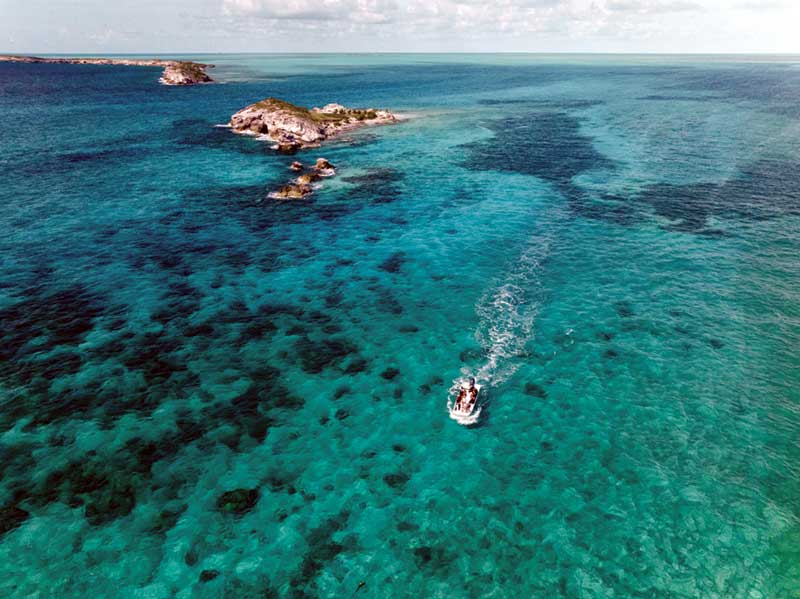
A School for Field Studies research vessel makes way over the clear turquoise waters of South Caicos.
Since 2012, SFS researchers, teachers, students, and volunteers have conducted long-term monitoring on reefs surrounding South Caicos, building a dataset that helps reveal how these ecosystems respond to environmental change over time. Survey sites include shallow reef areas near the shore that are less than 5 meters deep, along with reef systems in deeper waters that have coral structures at 10 meters and 20 meters of depth. These reefs serve as outdoor classrooms and living laboratories where students gain hands-on scientific experience while contributing to meaningful conservation research.
Using permanent monitoring transects, divers photograph sections of reef at regular intervals. Back in the lab, those images are analyzed to identify living coral, algae, sponge, sand, rubble, and other components that make up the reef community. Researchers also evaluate coral health using the internationally recognized CoralWatch Health Chart, which helps scientists detect early signs of coral bleaching, a temperature-related stress response. By repeating these surveys year after year, SFS scientists can distinguish short-term fluctuations from long-term trends, providing critical insights into reef resilience and recovery.
The shallows: abundant but vulnerable
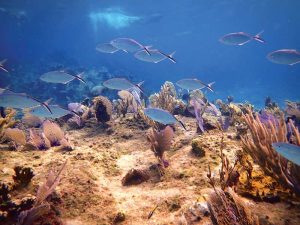
Life abounds in the shallow reef habitats, filled with an abundance of fish, corals, and algaes.
At 5 meters depth, reefs receive abundant sunlight, fueling the microscopic algae that live within coral tissue and provide much of the coral’s energy. Our research found that shallow reefs often support the highest levels of coral cover, demonstrating their ability to sustain productive reef communities. Interestingly, these communities tend to be dominated by just a few coral types that can be quite successful at colonizing large areas in the high-energy wave zone. Elkhorn coral, yellow porites, and octocorals are common examples of this.
However, life near the surface comes with risks. Shallow reefs face the full force of storms, intense sunlight, rapid warming events, shifting sediments, and increasing pressure from coastal development. During hurricanes, powerful waves can break apart coral colonies in a matter of hours. During prolonged heat events, surface waters may warm quickly to hot tub temperatures, increasing the risk of coral bleaching and death. These reefs are vibrant and essential, but they are also among the most exposed.
The middle ground
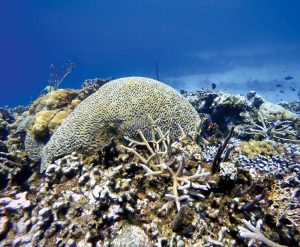
At 10 meters depth, conditions are calmer and a greater diversity of coral types are found.
At 10 meters, reefs occupy a transitional zone between shallow and deep environments. Here, coral communities still experience substantial sunlight while remaining influenced by changing weather, ocean currents, and seasonal temperature fluctuations. Data collected between 2012 and 2024 revealed that temperatures at 10 meters varied more throughout the year than those measured at 20 meters. These differences were especially pronounced during spring and fall transitions.
Variability itself is not necessarily harmful. In fact, some fluctuations are necessary to cue annual spawning events and help corals adapt to changing conditions. Trouble arises when environmental changes become too extreme too quickly, or occur in combination with other stressors such as poor water quality, disease outbreaks, excessive algal growth, or storm impacts. Understanding how corals respond to these overlapping pressures is a key area of ongoing research at SFS.
The deep reef refuge
Now at 20 meters of depth, conditions become noticeably different on the reef. Sunlight is reduced, temperatures tend to remain more stable, and environmental disturbances near the surface may have less direct impact. For years, scientists have wondered whether these deeper reefs could serve as refuges for coral populations during periods of environmental stress. Our findings suggest they may play an important role.
Across surveyed sites, deeper reefs exhibited slightly higher coral cover and significantly greater coral diversity and evenness of species representation than reefs at 10 meters. These habitats often supported coral species that were less common in shallower waters, highlighting their potential importance as reservoirs of biodiversity.
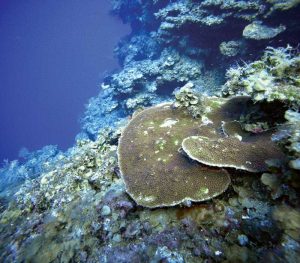
The surreal, dark blue of a deep reef is also often a refuge for rare corals.
In other words, deeper reefs may help preserve the variety of coral life needed for future recovery. After great extinction events like that Permian-Triassic, it is often the slow-growing corals from deep, sheltered areas of the seafloor that eventually evolve and recolonize the more variable yet productive shallow reef crests. A deep refuge holds an evolutionary back-up for coral reefs.
A warning beneath the surface
Yet deeper does not guarantee safety. While some deep reefs appear more diverse, the broader picture reveals a concerning trend: coral cover has declined across monitored sites throughout South Caicos over the past decade, regardless of depth. Multiple stressors are shaping this decline. Importantly, our long-term data suggest that no single factor alone tells the entire story. Coral ecosystems are responding to multiple interconnected pressures that vary across locations and depths.
Marine heat waves and bleaching events continue to threaten coral health. Hurricanes can physically damage shallower reef structures and bury deeper reefs under tons of sediment. Algae can outcompete corals for space, especially as pollution and overfishing upset system balance. Diseases such as Stony Coral Tissue Loss Disease (SCTLD) have devastated coral populations throughout the Caribbean, causing near-extinction of several species. Additional pressures from coastal development and changing water quality further challenge reef resilience.
Protecting the entire reef system
South Caicos is home to a connected reef ecosystem that stretches from its rocky shores and sandy bays to its azure offshore waters. Fish, coral larvae, nutrients, and energy move throughout this entire network, linking habitats together in ways scientists are only beginning to fully understand. Protecting one depth while neglecting another would leave critical pieces of the ecosystem vulnerable.
That is why SFS scientists continue to advocate for comprehensive monitoring across the full reef gradient. Future efforts will include establishing matched monitoring sites at 5, 10, and 20 meters, and tracking individual coral colonies through bleaching, recovery, disease, and survival. Water temperatures at each site will be tracked for the whole year to examine cumulative heat exposure, temperature extremes, and the length of time colonies remain under stress. These data sets and more are essential for informing conservation decisions and identifying where restoration efforts are most likely to succeed.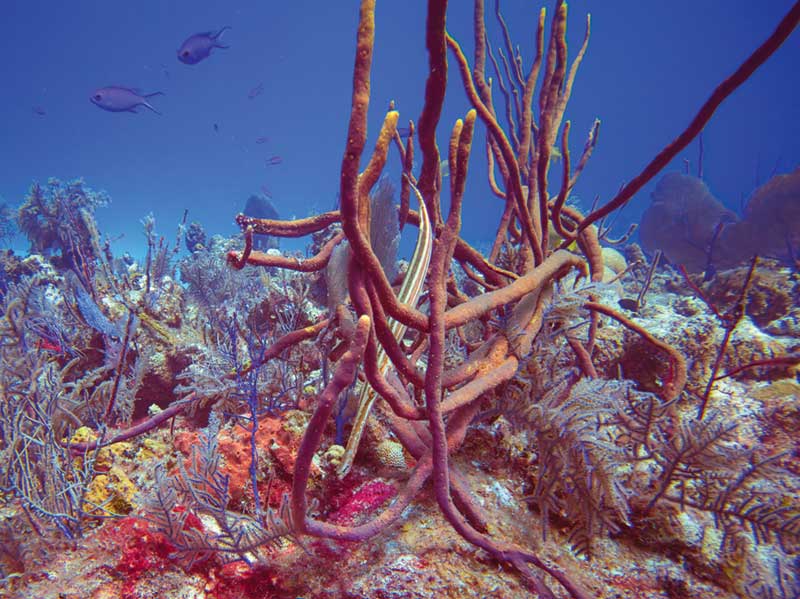
Hope for the future
Reading that coral cover has declined may sound discouraging. Yet every surviving coral colony represents hope. Healthy colonies continue to grow, reproduce, and provide habitat for countless marine species. Diverse deep-water reefs may contain resilient coral populations capable of helping ecosystems recover. Shallow reefs continue to connect mangroves, seagrass beds, and offshore habitats into one functioning marine landscape.
Most importantly, there are actions we can take. Reducing pollution, preventing anchor damage, supporting sustainable coastal development, making reef-safe choices, and investing in conservation science can all help protect these irreplaceable ecosystems. At SFS, our students and scientists are working every day to generate the knowledge needed to safeguard the reefs of South Caicos for future generations.
South Caicos does not have one reef at one depth. It has a connected gradient ecosystem extending from the bright, energetic shallows into calm, dark blue depths. Understanding the entire ecosystem is one of our best strategies for protecting the future of our shared coral reef. Together, we can help ensure that South Caicos’ coral reefs continue to thrive for generations to come.
Want to get involved? Support our research, education, and conservation initiatives by visiting our website and making a donation. Stay connected with our latest discoveries on Instagram: @the_sfs_tci, @sfs_sccrc.
Planning a visit to South Caicos? Book a tour at The School for Field Studies Center for Marine Resource Studies campus. For more information, contact Dr. Heidi Hertler, Center Director, at hh******@**********es.org.
What's Inside The Latest Edition?

On the Cover
Local photographer Watsonne Morency (www.watsonnephotography.com) took to The Shore Club to capture this image of Miss Turks & Caicos International 2026 Adesha Gustave.
Our Sponsors


Leave a Reply